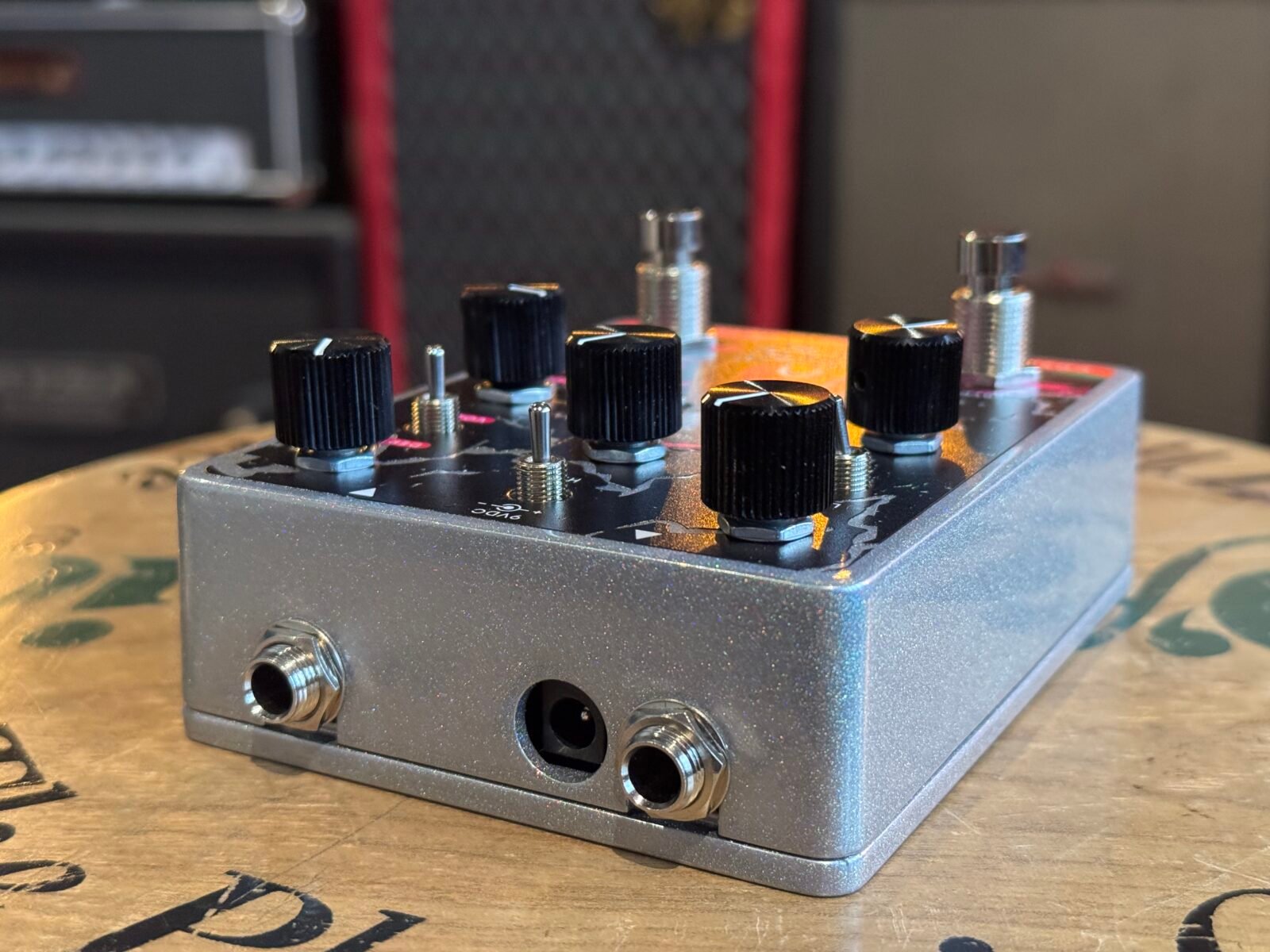

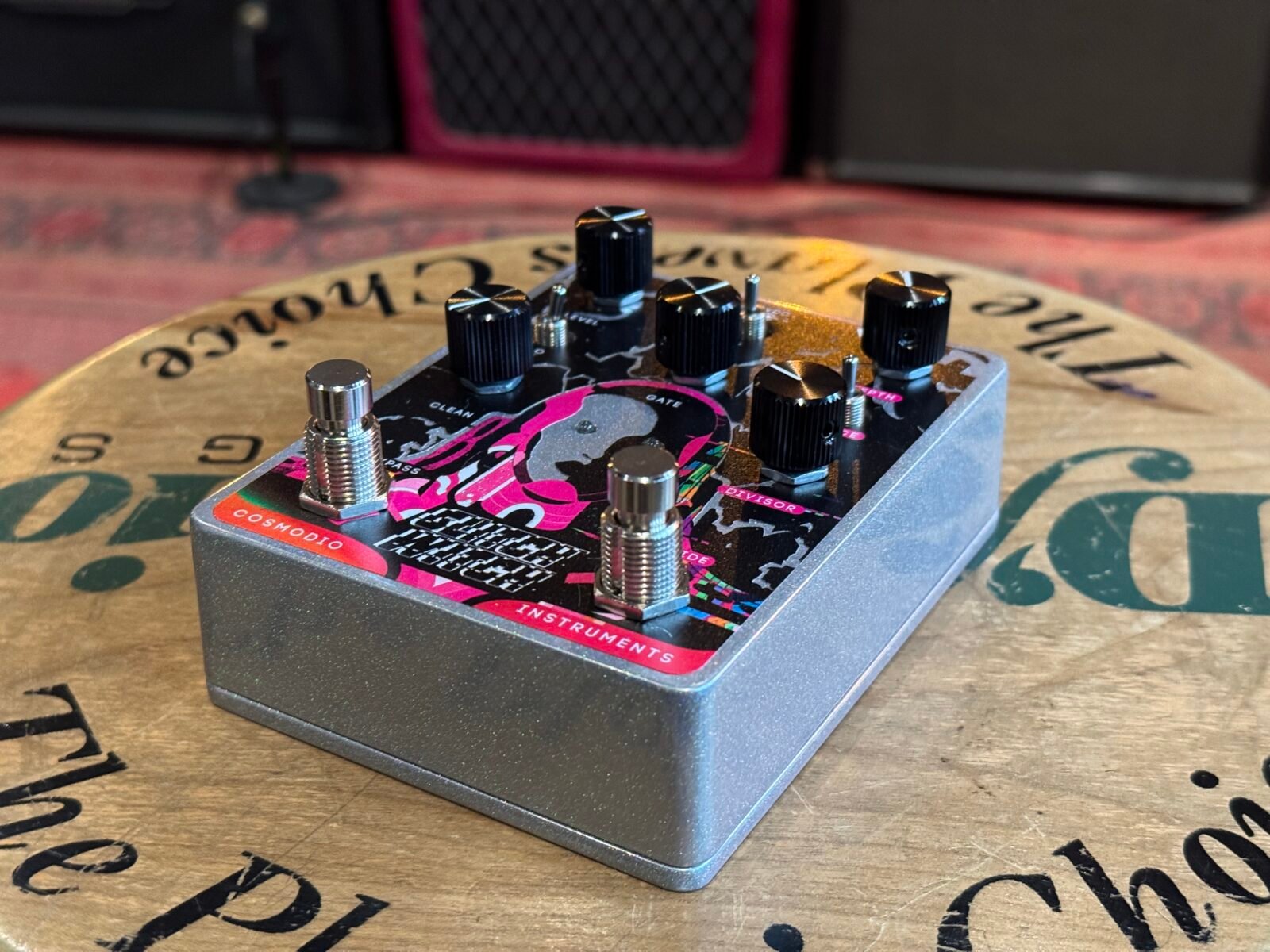
CMOS Fuzz · Sub-Octave · Ring Mod · Bit Crush · Pitch-Locked Modulation · Clean Blend · Smart Switching · 100% Analog
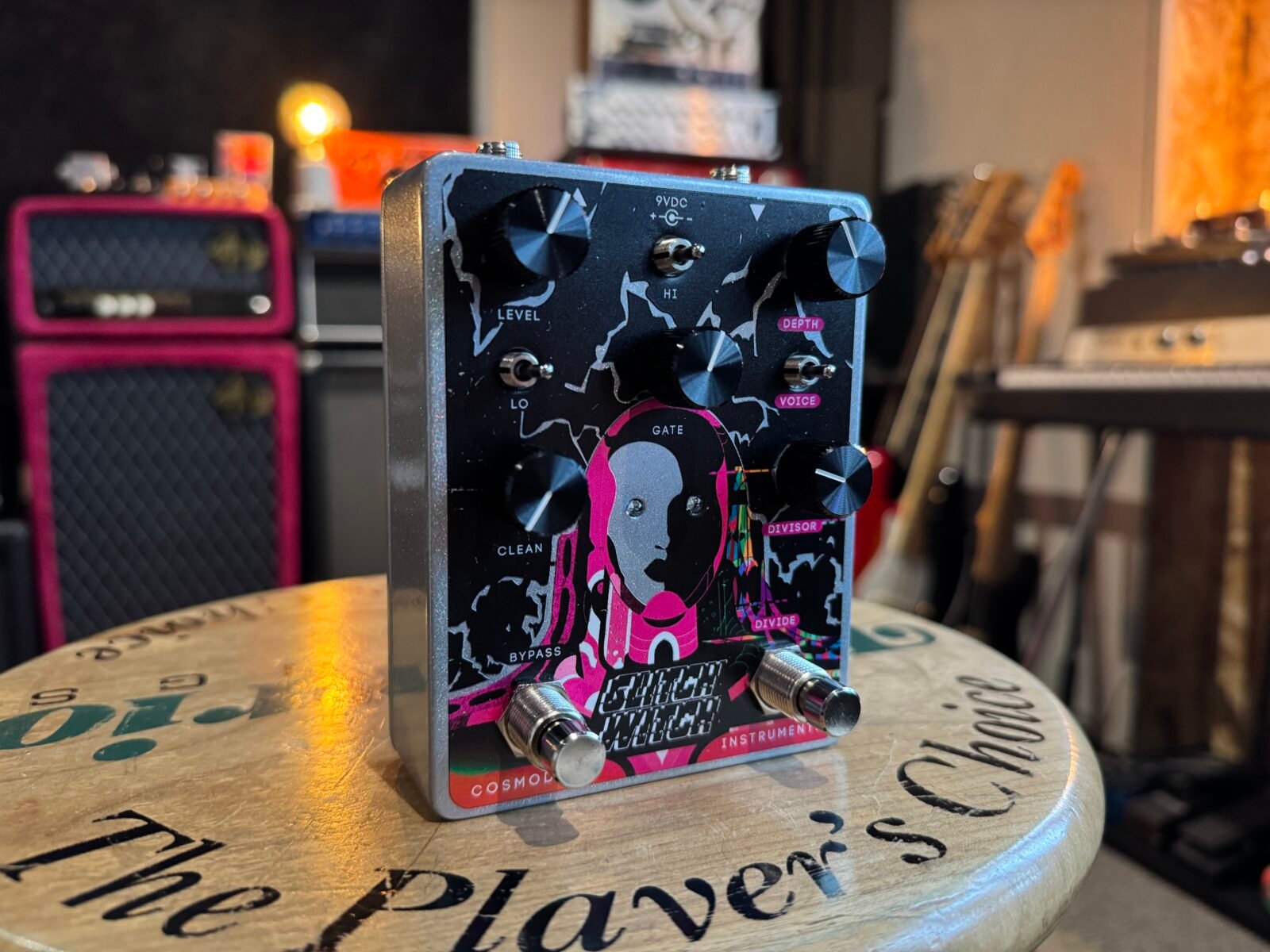
The Cosmodio Instruments Glitch Witch is a 100% analog CMOS fuzz that uses frequency dividers to turn the input signal into sub-octaves, ring modulation, rhythmic pulses, glitch and bit-crushed-style textures.
It is not based on a traditional Fuzz Face, Tone Bender or Muff circuit. Glitch Witch is an original Cosmodio design, although its core fuzz can move into the dry, grinding territory of an under-biased Tone Bender MkII. That vintage reference is only one end of the spectrum. Engage the Divide section and the pedal moves much closer to CMOS logic, frequency-divider circuits and analog synthesis techniques.
The key difference is that its modulation is not driven by a conventional LFO. When the frequency dividers are active, modulation rates are derived from subharmonic divisions of the pitch of your input signal. Higher notes create faster movement, while lower notes slow everything down.
This behavior takes inspiration from the Rhythmicon, developed by Leon Theremin and Henry Cowell in the 1930s, an instrument built around the mathematical relationship between pitch and rhythm. Glitch Witch turns that concept into a considerably more destructive tool for guitar, bass, synthesizers and other sources.
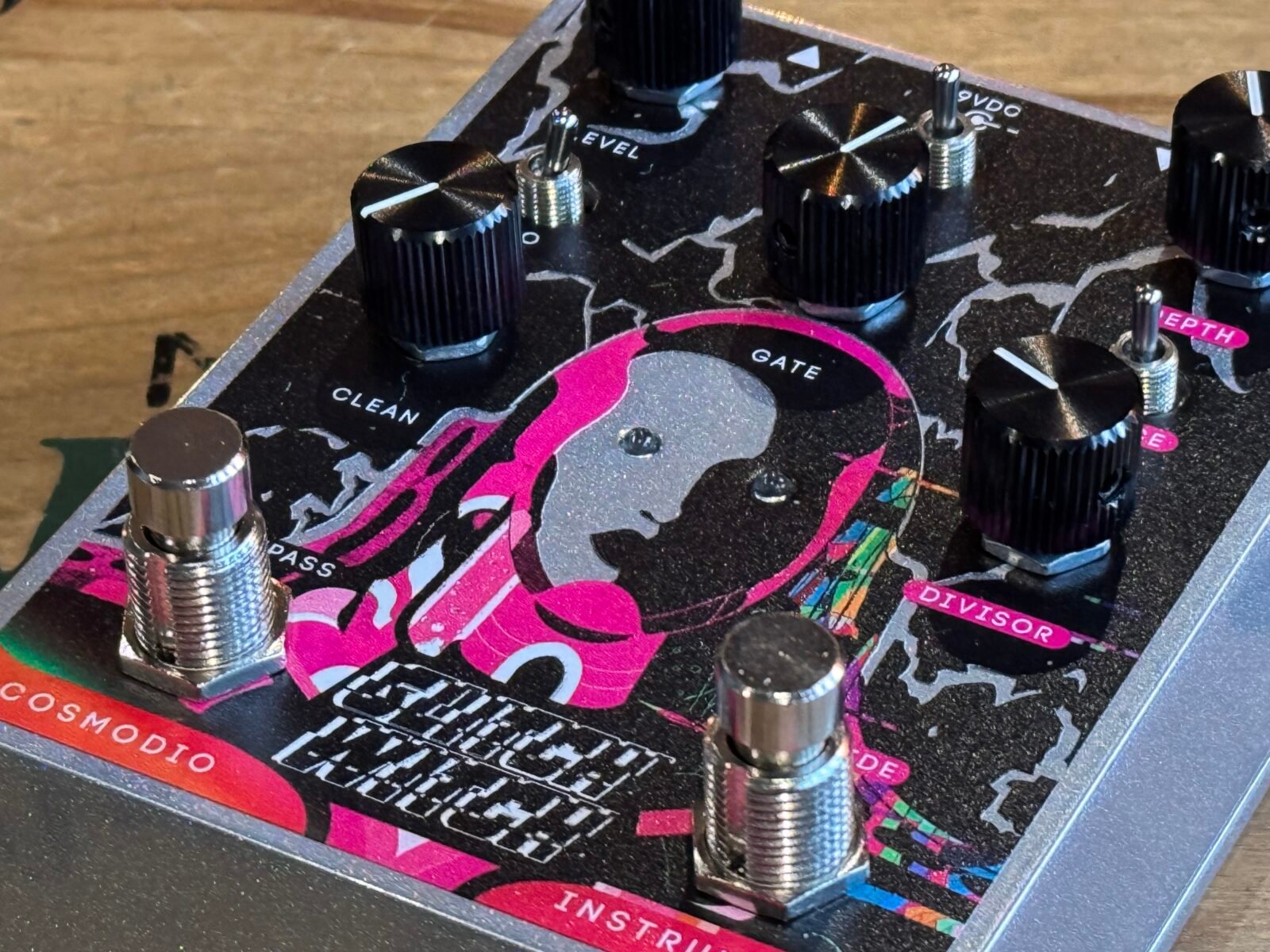
With Divide off, the pedal works as a fast and aggressive CMOS fuzz. Gate ranges from long sustain to short, spitty, almost Velcro-like decay. The independent Hi and Lo controls form a flexible two-band EQ capable of thick low-end fuzz, scooped sounds, strong midrange or sharp cutting highs.
The parallel Clean control brings back definition and attack when the fuzz and modulation become especially dense.
Engage Divide and the frequency dividers become part of the fuzz engine. Voice provides three different behaviors: amplitude modulation / ring modulation, crude frequency modulation and pitch-tracking instability. Divisor and Depth determine how quickly and how strongly those processes affect the signal.
The result can move from recognizable gated fuzz into synthetic sub-octaves, chiptune-style textures, stutters, pulses, metallic ring modulation and rhythmic patterns that change speed according to the notes you play.
This is not a fuzz designed to behave exactly the same way every time. Much of the fun comes from finding the point where the circuit is still following you but has started developing ideas of its own.
Find the Cosmodio Instruments Glitch Witch at onemorepedal.com.
It’s a fuzz until you hit Divide. After that, negotiations begin.